

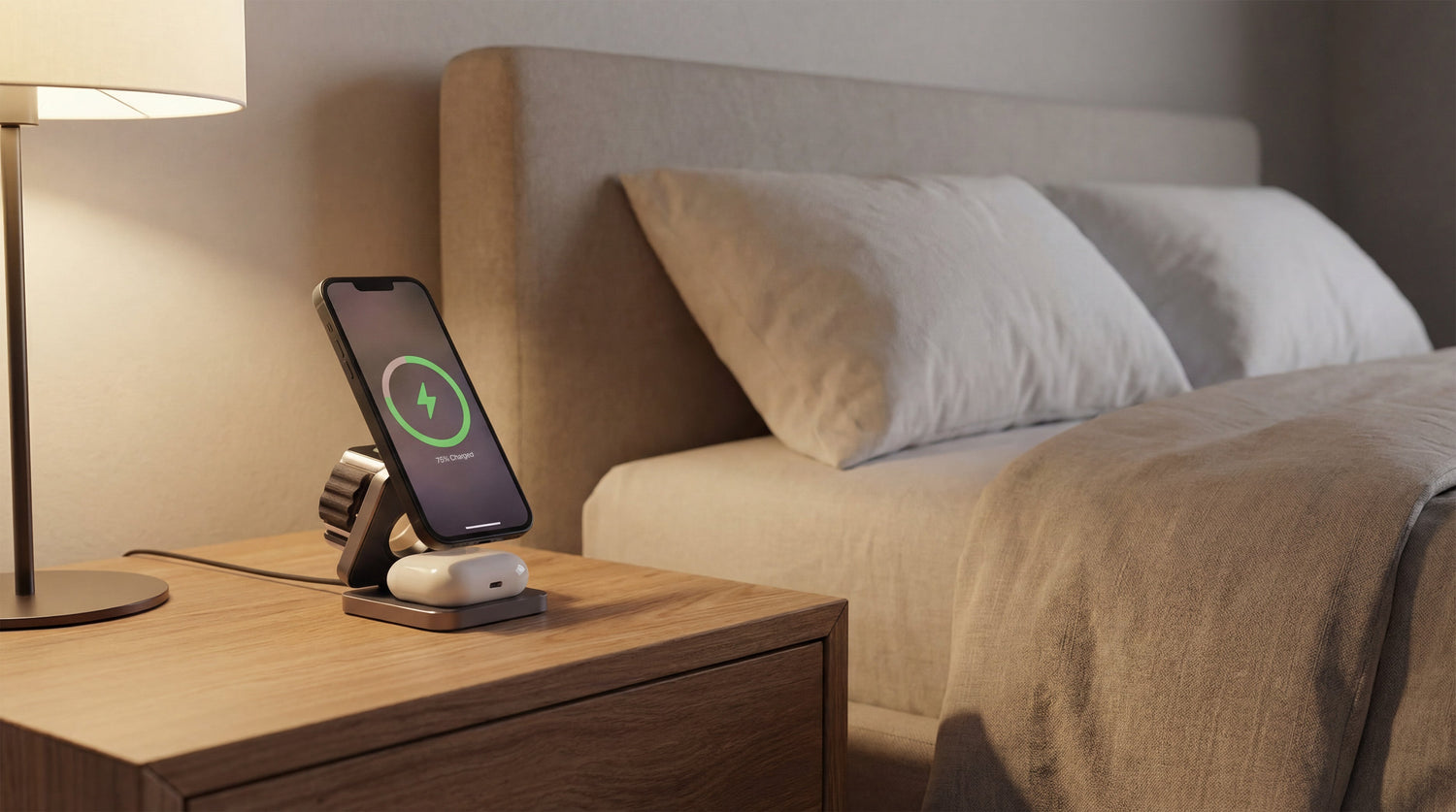
Wireless charging works by passing power through magnetic induction between two coils, no cable required. Qi2 is the current industry standard and adds magnetic alignment (similar to Apple's MagSafe) so the phone snaps into the optimal charging position automatically. Most phones cap wireless charging speed well below their wired maximum (commonly 7.5–15W versus 25–45W wired), so a "fast wireless charger" rarely matches a fast wired charger. Case thickness, magnetic phone grips, and metal phone rings are the most common reasons wireless charging slows down or stops working.
How does wireless charging actually work?
Wireless charging uses a method called magnetic induction. A coil inside the charging pad generates an electromagnetic field, and a matching coil inside the phone converts that field back into electrical current to charge the battery. No physical connection is needed between the charger and the phone, which is why the pad and the phone only need to be touching, not plugged in.
This is different from how a cable charges a phone. A cable sends electricity directly through a physical connection, which is more efficient. Wireless charging always loses some energy as heat during the conversion, which is one reason wireless charging is typically slower than wired charging and why phones can feel warm while charging wirelessly.
What is Qi2, and is it different from regular wireless charging?
Qi2 is the current wireless charging standard, introduced as an upgrade to the original Qi standard that most wireless chargers have used since 2017. The main addition in Qi2 is a magnetic alignment system, where magnets in the charger and the phone pull the device into the exact center of the charging coil automatically.
This matters because wireless charging is highly sensitive to alignment. If the coil in the phone isn't sitting directly over the coil in the charger, charging slows down significantly or stops. Before Qi2, getting consistent fast charging meant carefully placing the phone in the same spot every time. Qi2's magnets remove that guesswork, which is also why Qi2 chargers tend to charge more reliably even at the same wattage as older Qi chargers.
Is Qi2 the same thing as MagSafe?
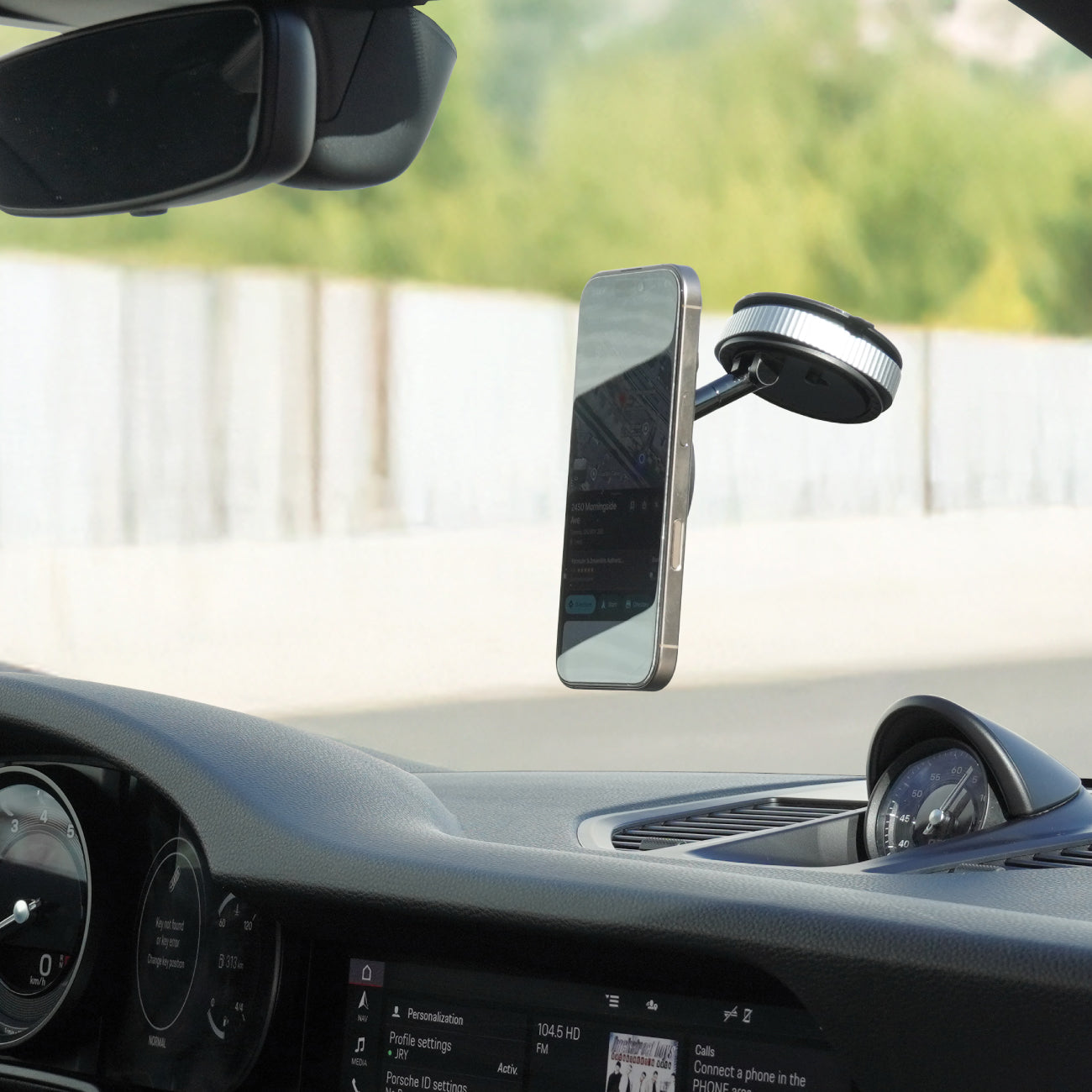
Not exactly, but they're closely related. MagSafe is Apple's branded magnetic charging system, introduced with the iPhone 12 in 2020. Qi2 was developed afterward by the Wireless Power Consortium and uses the same magnetic ring layout as MagSafe, which means Qi2 chargers are built to work with MagSafe-compatible iPhones, and many newer Android phones now support Qi2 as well.
In practice: an iPhone 12 or newer will work with both MagSafe-branded chargers and Qi2 chargers, since they use the same magnet array. A phone with no magnets at all can still charge on a Qi2 pad, just without the snap-into-place alignment.
Our MagSafe compatible wireless chargers
Why is my wireless charger so much slower than my cable?
This is the most common point of confusion, and it comes down to wattage limits set by the phone itself, not the charger. Most smartphones cap their wireless charging input far below their wired charging input. A phone capable of 45W wired charging might only accept 15W wirelessly, and many phones are limited to 7.5W or 10W on wireless regardless of how powerful the charger is.
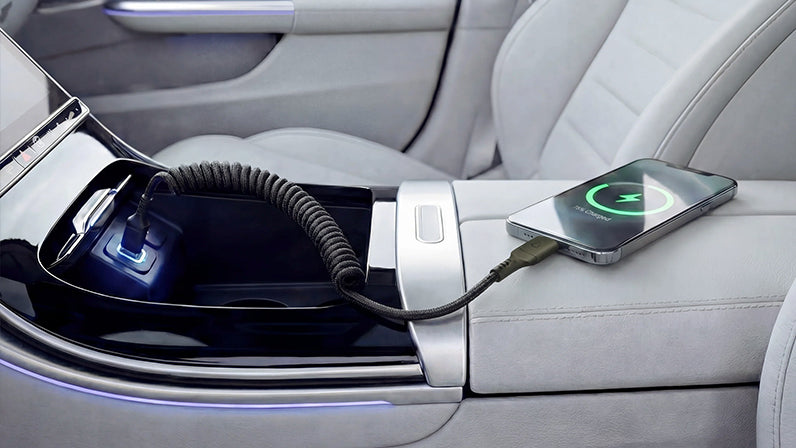
That means buying a higher-wattage wireless charger only helps up to the ceiling your specific phone allows. Beyond that point, extra wattage from the charger goes unused. If charging speed is the priority, a wired charger paired with a quality cable will almost always outperform wireless charging on the same phone.
What slows down or blocks wireless charging?
A handful of everyday factors interfere with the magnetic connection wireless charging depends on:
Thick or magnetic cases. Most phone cases under 3mm don't meaningfully affect charging, but cases with built-in magnetic wallets, kickstands, or battery packs can block the field or pull the phone's coil out of alignment.
Metal objects between the phone and charger. Pop sockets, metal rings, credit cards with magnetic strips, or coins left on the charging pad can interfere with or completely stop the connection.
Misalignment on non-Qi2 chargers. Without magnets to self-center the phone, even a few millimeters of misalignment on an older Qi charger can cut charging speed significantly.
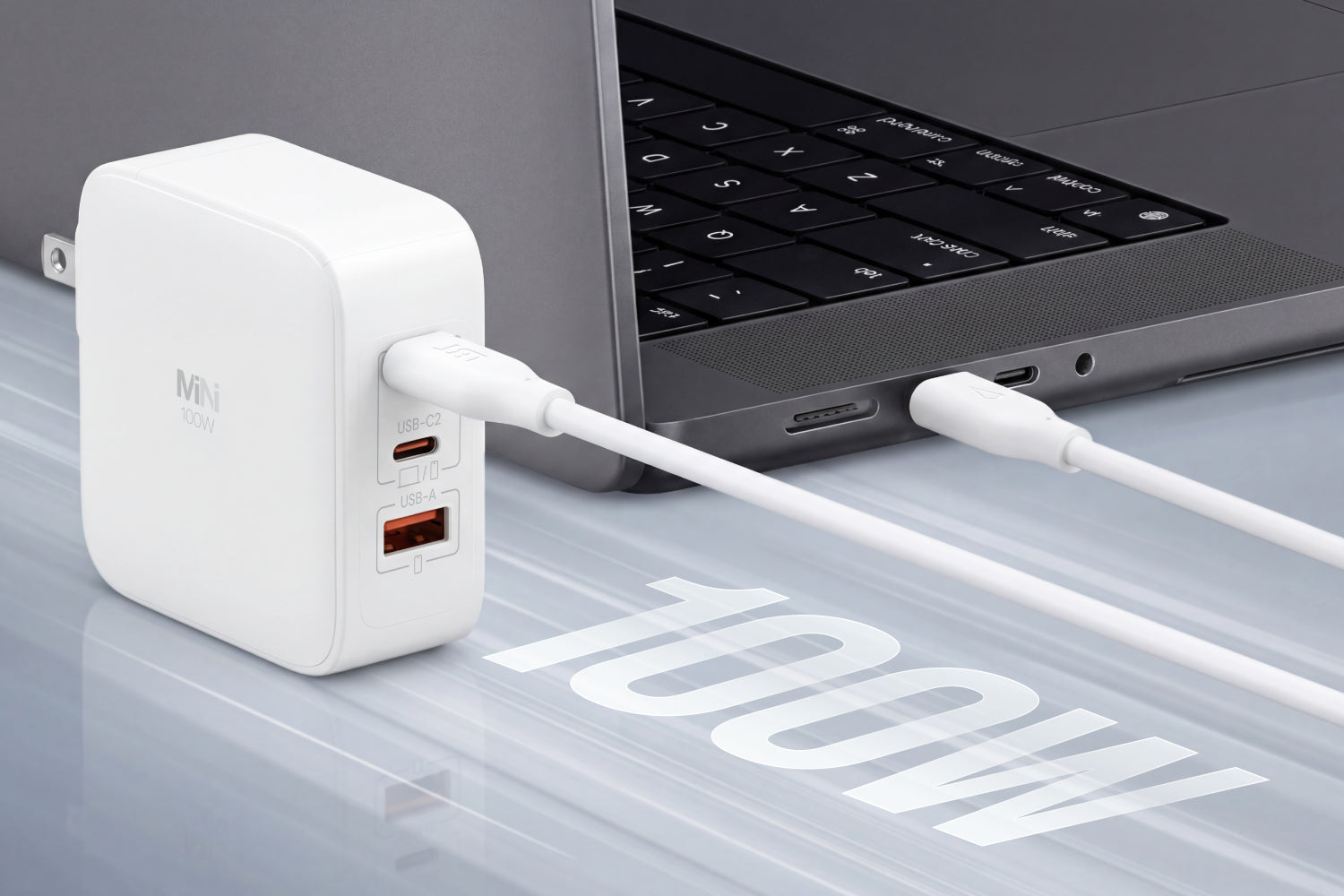
Low-quality or underpowered chargers. A wireless pad needs adequate wattage input from its own power source (often through a USB-C cable into a wall adapter) to deliver its rated output. A weak wall adapter upstream will bottleneck the wireless charger regardless of its own rating.
Is wireless charging bad for phone batteries?
Wireless charging is not inherently worse for long-term battery health than wired charging. Lithium-ion batteries degrade based on heat and charge cycles, not the charging method itself. Because wireless charging generates more heat through the induction process, charging in a cooler environment and avoiding charging through a thick case can help minimize any heat-related wear over time.
Do I need a special charger for Qi2, or will my old wireless charger still work?
An older Qi charger will still charge a Qi2-compatible phone, since Qi2 devices remain backward compatible with the original Qi standard. The phone simply won't get the benefit of magnetic alignment on a non-Qi2 charger, meaning the user has to manually center the phone for the best charging speed. A Qi2 charger is the better long-term choice for anyone using a MagSafe-capable iPhone or a newer Qi2-certified Android phone, since the magnetic snap makes day-to-day charging far more consistent.
FAQ
Does wireless charging work through a popsocket or phone grip? No. A popsocket or phone grip sits between the phone and the charging coil, breaking the connection or significantly weakening it. These need to be removed before placing the phone on a wireless charger.
Can I use a wireless charger and a wired charger on different phones at the same time? Yes, wireless and wired charging operate independently and don't interfere with each other across different devices.
Will a more expensive wireless charger charge my phone faster than my phone's limit allows? No. Charging speed is capped by whichever component, the charger or the phone, has the lower wattage limit. A higher-wattage charger paired with a phone capped at 10W will still only deliver 10W.
Is Qi2 available on Android phones, or is it Apple-only? Qi2 is an open industry standard, not an Apple-exclusive technology. A growing number of Android phones now ship with Qi2 support, though MagSafe branding itself remains specific to Apple devices.

Leave a comment
This site is protected by hCaptcha and the hCaptcha Privacy Policy and Terms of Service apply.