

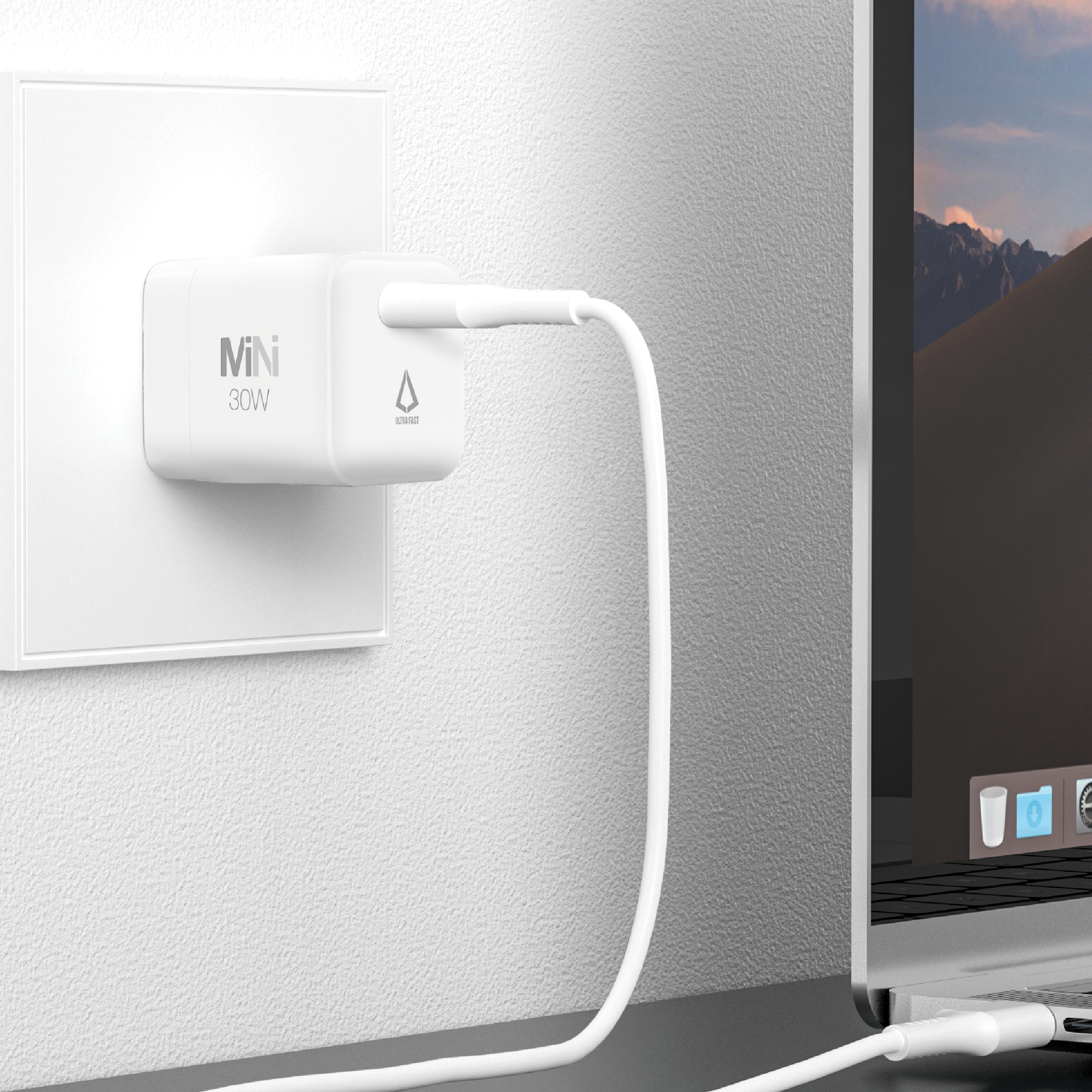
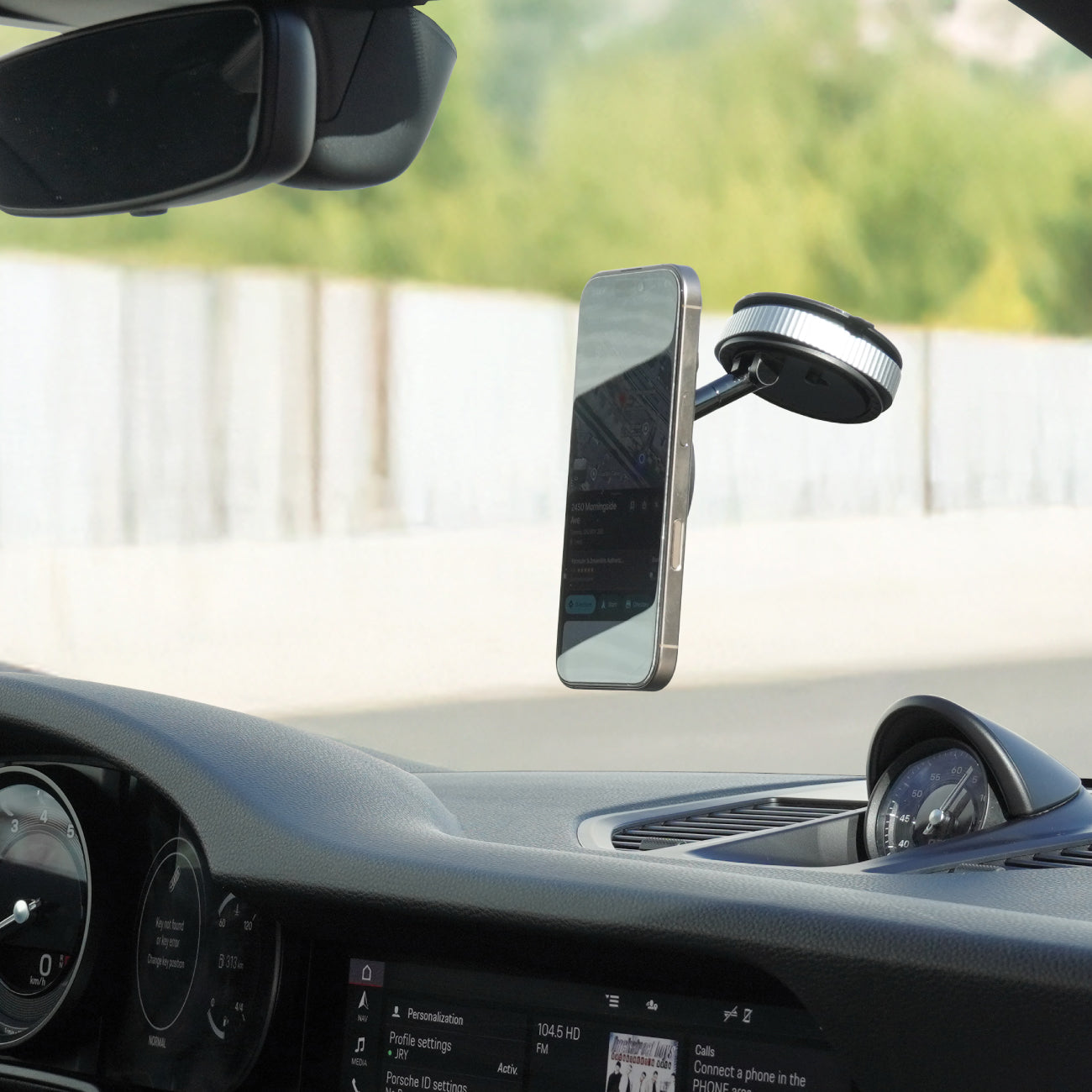
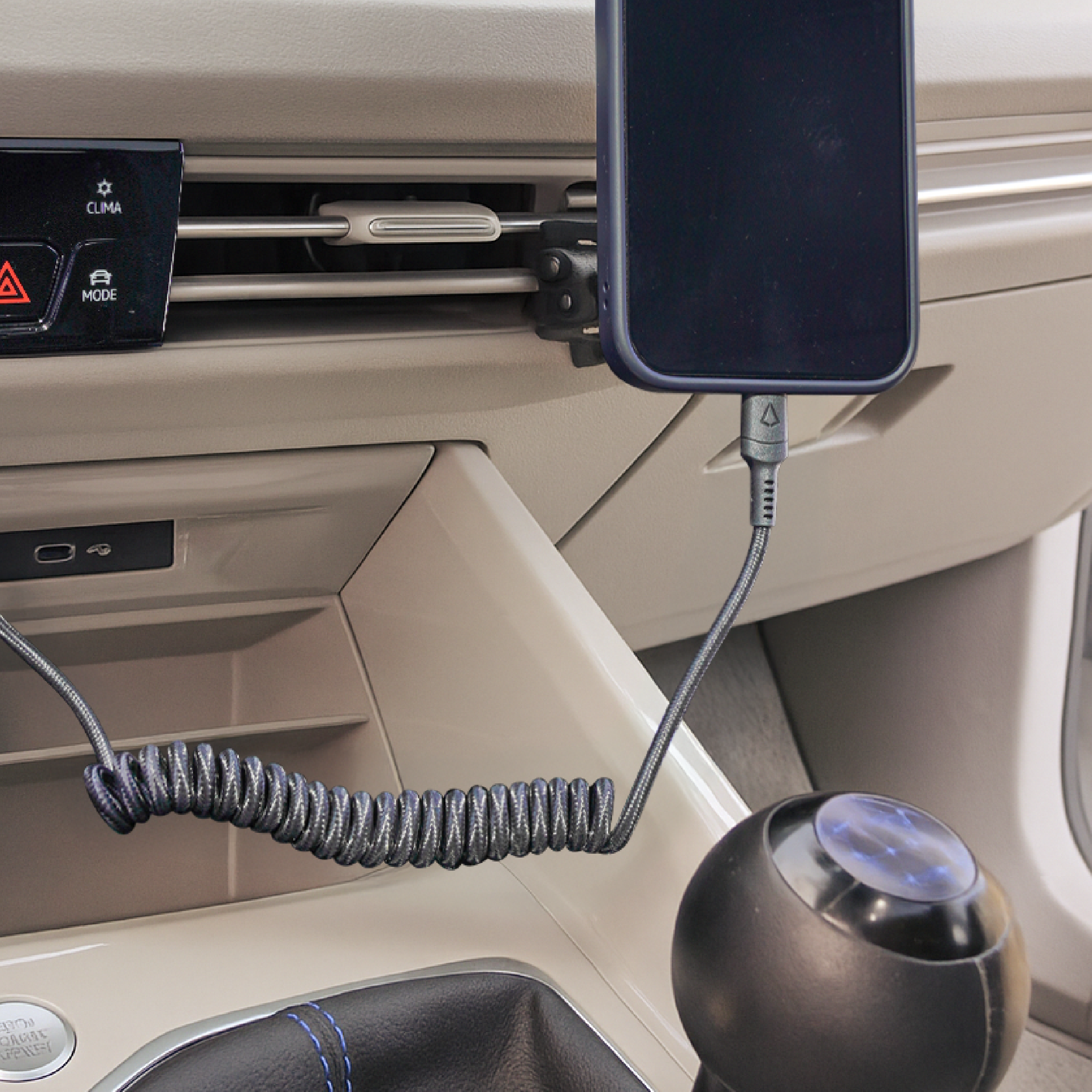
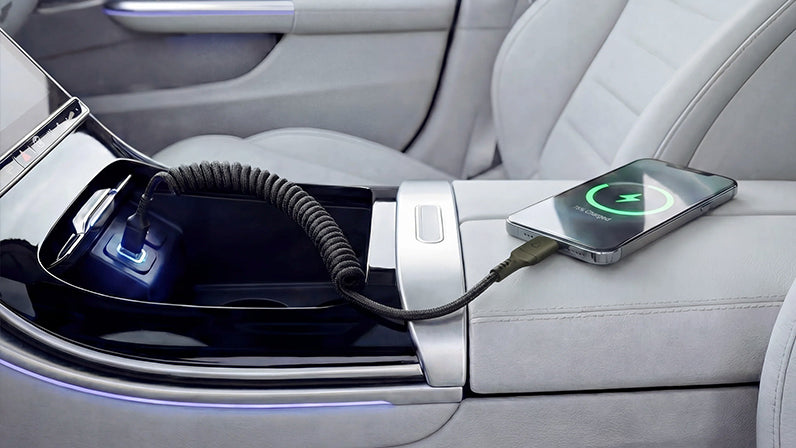
A car charger's wattage needs to match or exceed your phone's fast-charging spec, or your phone will charge slowly even with navigation, music, and a mount drawing power simultaneously. Coiled cables are worth the extra cost in a car because they don't dangle, snag on seats, or wear out at the connector point the way straight cables do. Magnetic and clamp mounts each solve different problems, magnetic mounts are faster to use one-handed, while clamp mounts hold more securely over rough roads and don't require a metal plate on the phone or case.
Why does my phone charge so slowly in the car?
The most common cause is a mismatch between the car charger's output and what the phone is drawing while it's in use. Running GPS navigation, streaming music, and keeping the screen on for a mount display all pull power from the battery at the same time the charger is trying to add power back in. A low-wattage car charger (5W–10W) may only offset that usage rather than actually charging the phone, which is why a phone can finish a long drive at the same battery percentage it started at.
The fix is matching charger wattage to the phone's actual fast-charging capability. A phone rated for 25W or 45W fast charging needs a car charger that can deliver close to that output to charge meaningfully while in active use, not just trickle power in.
What wattage car charger do I actually need?
This depends on the phone, since manufacturers set different fast-charging ceilings:
18W–20W covers most iPhones for a noticeable charging boost during a drive, since iPhones generally cap fast charging around this range.
25W–45W is the range most modern Android flagships support, and a charger below this threshold will charge a high-wattage Android phone closer to standard speed than fast speed.
Dual-port chargers split their total wattage across both ports when used simultaneously, so a charger rated 40W total split across two ports may only deliver 20W per port, which matters if two people are charging phones from the same charger at once.
Checking the phone's specifications for its maximum wired charging wattage is the most reliable way to choose a car charger that won't bottleneck the phone.
Why are coiled cables better for car use than straight cables?
A coiled cable is a cable wound into a spring-like shape rather than running flat. In a car, this solves a few problems straight cables run into:
Length management. A coiled cable retracts back to a short length when not stretched, so there's no excess cable dangling near gear shifters, cup holders, or seat tracks where it can get caught or yanked.
Reduced strain at the connector. Repeated bending in the same spot, which happens constantly with a straight cable in a car's tight space, is one of the leading causes of cable failure at the connector. A coil cable distributes that bending stress across its full length instead of concentrating it at one point.
Reach without slack. A coiled cable can still extend to reach a phone mounted on the dash or windshield, then spring back out of the way once disconnected.
The tradeoff is that coiled cables are typically a few dollars more than straight cables of the same length and connector type, which is a reasonable cost given how much more wear-resistant they are in daily car use.
Magnetic mount or clamp mount: which is actually better?
Neither is universally better, they solve different problems:
Magnetic mounts use a metal plate (often included, applied to the back of the phone or under a case) and strong magnets in the mount itself. The main advantage is one-handed attachment, the phone snaps into place without needing to align it into a clamp. The tradeoffs: a metal plate is required somewhere on the phone or case, and very heavy phones with bulky cases can occasionally overpower weaker magnets on rough roads.
Clamp mounts physically grip the sides of the phone with spring-loaded or twist-tightened arms. These don't require any modification to the phone and tend to hold more securely under vibration or sudden stops, but require two hands to open the clamp and align the phone each time.
For phones already in a case with a magnetic-ready back (or a MagSafe-compatible iPhone), a magnetic mount is usually the more convenient daily choice. For maximum hold security, particularly on a phone without a case or on rough roads, a clamp mount is the safer option.
Does mounting my phone over the air vent or on the windshield matter?
It affects both charging and mount stability, not just convenience:
Vent mounts clip onto the air vent louvers and are usually the most adjustable and lowest-profile option, but rely on the vent's plastic fins, which can wear down or break on cheaper vents over repeated use.
Windshield and dash mounts use a suction cup or adhesive base and tend to offer more stable positioning for taller viewing angles, but suction mounts can lose grip in extreme heat, which is worth considering for cars parked outdoors in summer.
For wireless charging mounts specifically, dash and windshield placement generally keeps the phone more level and properly aligned with the charging coil than a vent mount, where gravity can pull the phone's angle away from flat.
Can I use a wireless charging mount in my car instead of a cable?
Yes, and it removes the step of plugging in a cable every time you get in the car, but two things matter for it to charge well: the mount itself needs to be wired into a sufficiently powerful 12V car charger or USB-C port (a weak power source upstream limits the wireless charger no matter how good the mount is), and the phone needs to sit aligned with the coil, which magnetic car mounts handle automatically if the phone supports MagSafe or Qi2.
FAQ
Will a higher-wattage car charger damage my phone? No. Phones negotiate charging speed with the charger and only draw the wattage they're built to accept, regardless of how much wattage the charger is capable of delivering.
Do I need a special car charger for fast charging, or does any USB-C charger work in a car? The connector type (USB-C) isn't what determines fast charging, the charger's internal power delivery (PD) circuitry and wattage rating are what matter. A USB-C car charger without PD support will still charge slowly even with a compatible cable.
Is it safe to leave a phone mount and charger plugged in all the time? Yes, modern car chargers and phones are built to handle being connected continuously without overcharging, since charging circuitry stops drawing power once the battery is full.
Why does my phone get warm when mounted and charging in direct sunlight? Direct sunlight adds external heat on top of the heat already generated by charging, which can cause a phone to slow or temporarily pause charging as a safety measure. Mounting out of direct sun exposure, when possible, helps maintain consistent charging speed.


Leave a comment
This site is protected by hCaptcha and the hCaptcha Privacy Policy and Terms of Service apply.