


There are hundreds of power banks on the market. Most of them advertise big numbers — "20,000mAh!" "100W!" — without explaining what those numbers mean for you specifically.
This guide cuts through that. By the end, you'll know exactly what capacity you need, what charging speed to look for, and which features are genuinely useful versus just marketing noise.
Start Here: What Do You Need to Charge?
Before looking at any specs, answer this:
- Is it just your phone?
- Phone plus earbuds or a smartwatch?
- Phone plus a tablet or laptop?
The answer determines almost everything else.
Understanding Capacity (mAh)
Capacity is measured in milliamp-hours (mAh) and tells you how much energy the power bank stores. Higher mAh = more charges before the power bank itself runs out.
But here's what the packaging often won't tell you: you don't get 100% of the rated capacity delivered to your device. Energy is lost in the conversion process — typically 10–15% — so a 10,000mAh power bank realistically delivers around 8,500–9,000mAh to your phone.
Practical capacity guide:
| Capacity | Best For | What You Get |
|---|---|---|
| 5,000 mAh | Emergency top-up, ultra-light carry | ~1 full phone charge |
| 10,000 mAh | Everyday carry, day trips | ~2 full phone charges |
| 20,000 mAh | Heavy users, multi-device, travel | ~4 phone charges, or 1–2 tablet charges |
| 25,000+ mAh | Laptop charging, remote work, long trips | Laptop + multiple device charges |
For most people — a commuter who wants backup power without carrying something heavy — a 10,000mAh power bank is the sweet spot. It fits in a jacket pocket, weighs under 200g in slim designs, and covers a full day of heavy phone use.
Understanding Output Speed (Wattage)
Capacity tells you how much power is stored. Wattage tells you how fast it gets to your device.
A 20,000mAh power bank with a 10W output will charge your phone slowly. The same capacity at 45W charges it fast. Both store the same energy — they just deliver it at very different speeds.
Wattage recommendations by device:
- Smartphones: 10–25W is fast charging for most phones. Above 30W won't hurt, but most phones cap out around 27–45W depending on make and model.
- Tablets: 30–45W
- Laptops (light use): 45–65W minimum
- Laptops (full speed): 100W+
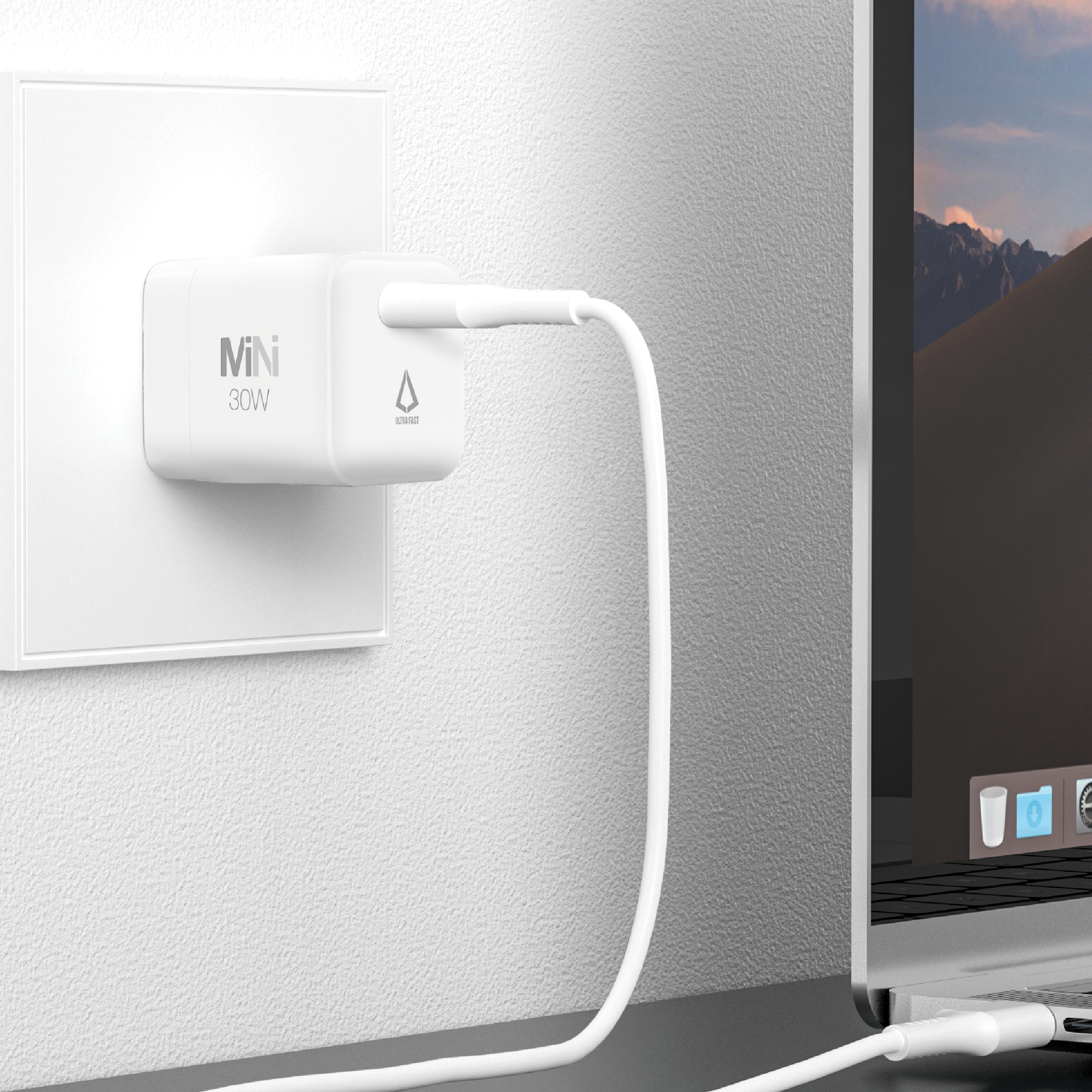
In 2026, USB-C Power Delivery (PD) is the universal fast-charging standard. Any portable charger you buy should have at least one USB-C PD port. Without it, you're leaving speed on the table.
What About mAh vs. Wh?
If you're travelling by air, you'll encounter watt-hours (Wh) — the measurement airlines use to regulate what's allowed in carry-on luggage.
The universal limit for most airlines is 100Wh. Most 20,000mAh power banks fall around 74Wh, putting them comfortably within the limit. To check your own: multiply mAh by 3.7 (standard cell voltage) and divide by 1,000.
Example: 20,000 × 3.7 ÷ 1,000 = 74Wh ✅ Airline-safe.
Always store your power bank in your carry-on — never checked luggage. This is a hard rule from aviation safety authorities.
Features Worth Paying For
Fast input charging How quickly does the power bank itself recharge? A 10,000mAh unit with only 10W input takes 4–5 hours to refill. The same capacity with 15–30W input can be done in 2 hours or less. This matters a lot if you travel and rely on top-ups between activities.
Pass-through charging This lets you charge the power bank and a connected device simultaneously from one wall outlet — useful for hotel rooms with limited plugs.
Built-in cables Some power banks include a built-in USB-C or Lightning cable. It's a small thing that removes a lot of friction — you're never hunting for a cable at the bottom of your bag.
Features That Don't Matter as Much as You'd Think
Wireless charging on the power bank Qi wireless charging through a power bank is convenient if you frequently set your phone down, but it's slower and less efficient than wired. If speed is a priority, wired output wins.
Very high port counts Four or five ports sounds useful, but total wattage is fixed. The more devices you plug in, the slower each one charges. Unless you're charging an entire family, two well-spec'd ports usually serve better than four weak ones.
Quick-Reference Buyer's Guide
| Use Case | Recommended Capacity | Recommended Output |
|---|---|---|
| Light everyday backup | 5,000 mAh | 15W+ |
| Daily driver (phone user) | 10,000 mAh | 15W+ |
| Heavy user or multi-device | 20,000 mAh | 45W+ |
| Laptop + devices, remote work | 25,000+ mAh | 65–100W |
| Travel (airline-safe) | Up to ~27,000 mAh | Any (under 100Wh) |
The Bottom Line
The best power bank isn't the one with the highest mAh — it's the one that matches how you actually use it. Prioritize output wattage alongside capacity, verify it supports USB-C PD, and check the input speed so you're not waiting half a day for it to recharge.
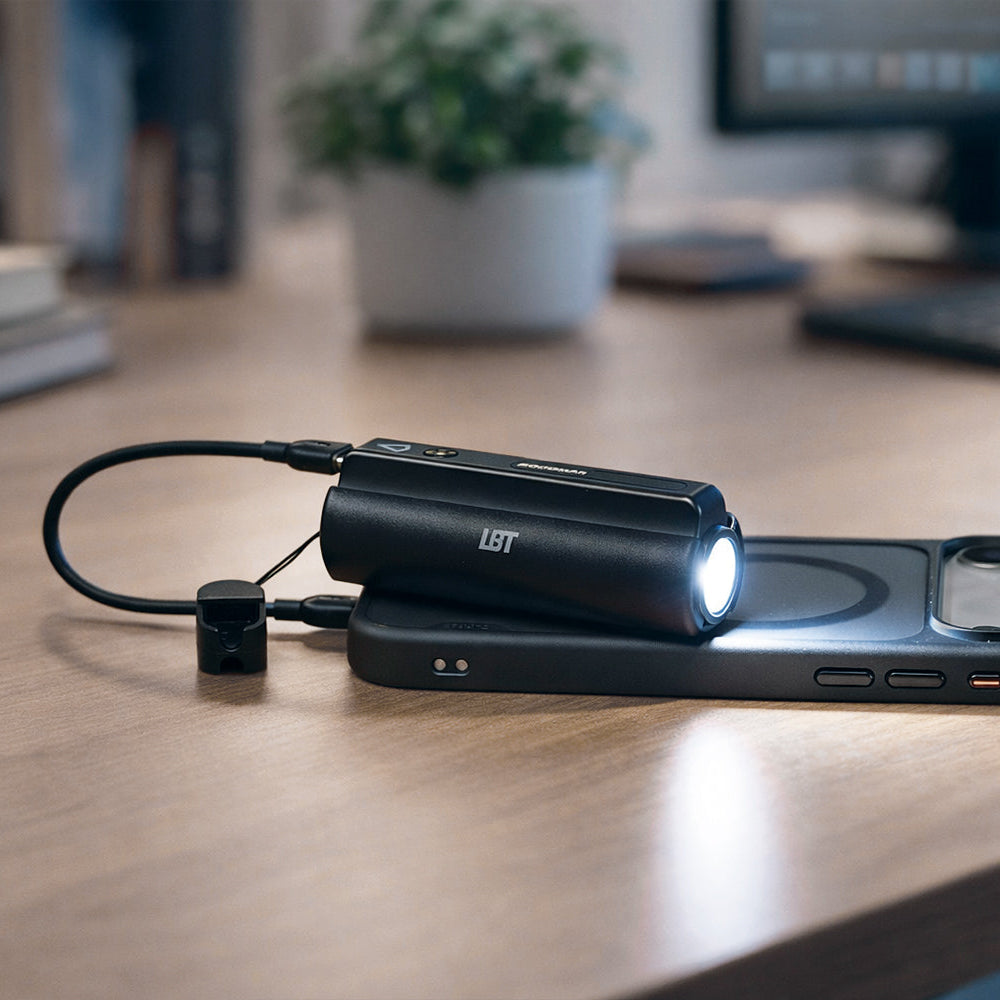
LBT's power bank lineup is built around these fundamentals: real-world capacity, fast output, and enough flexibility to handle daily carry or travel without adding unnecessary bulk.
Browse LBT power banks at lbtstore.com

Leave a comment
This site is protected by hCaptcha and the hCaptcha Privacy Policy and Terms of Service apply.