

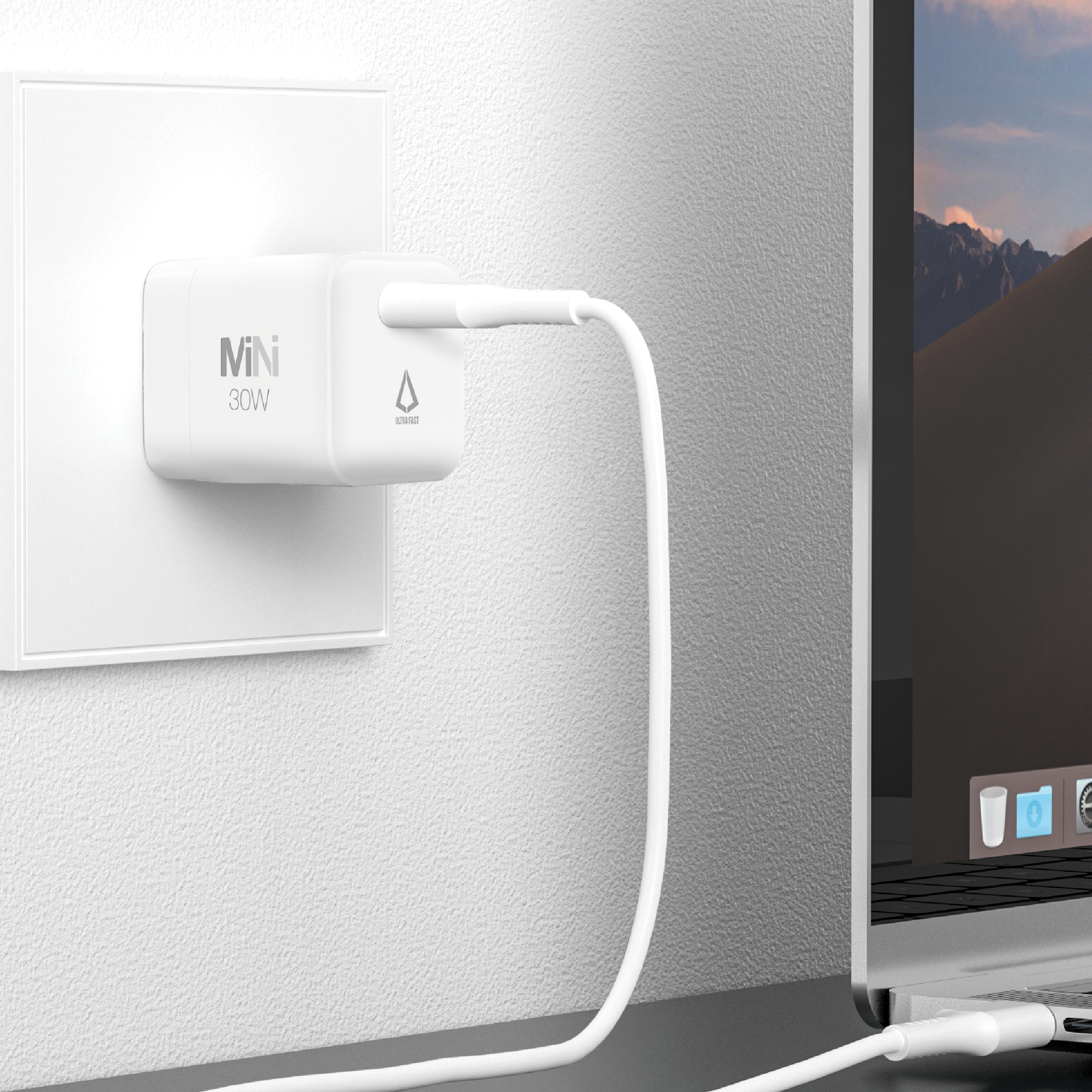
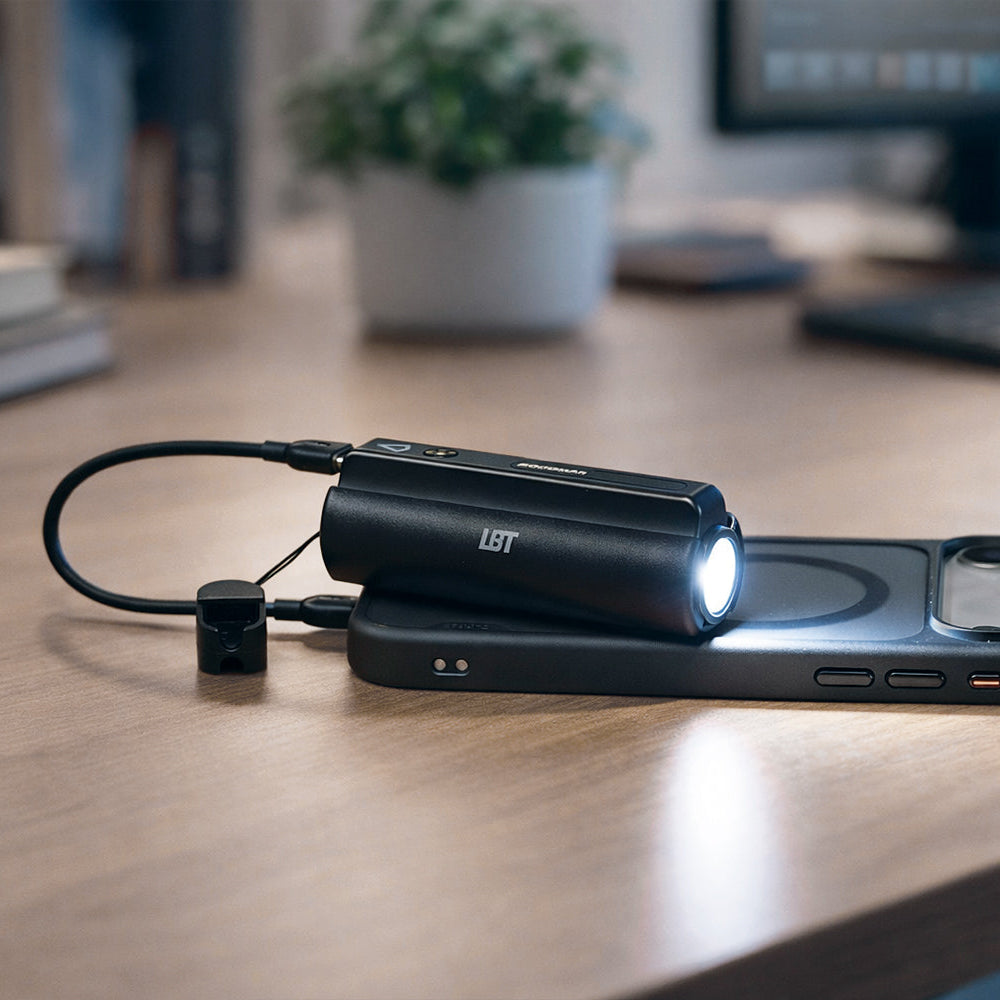
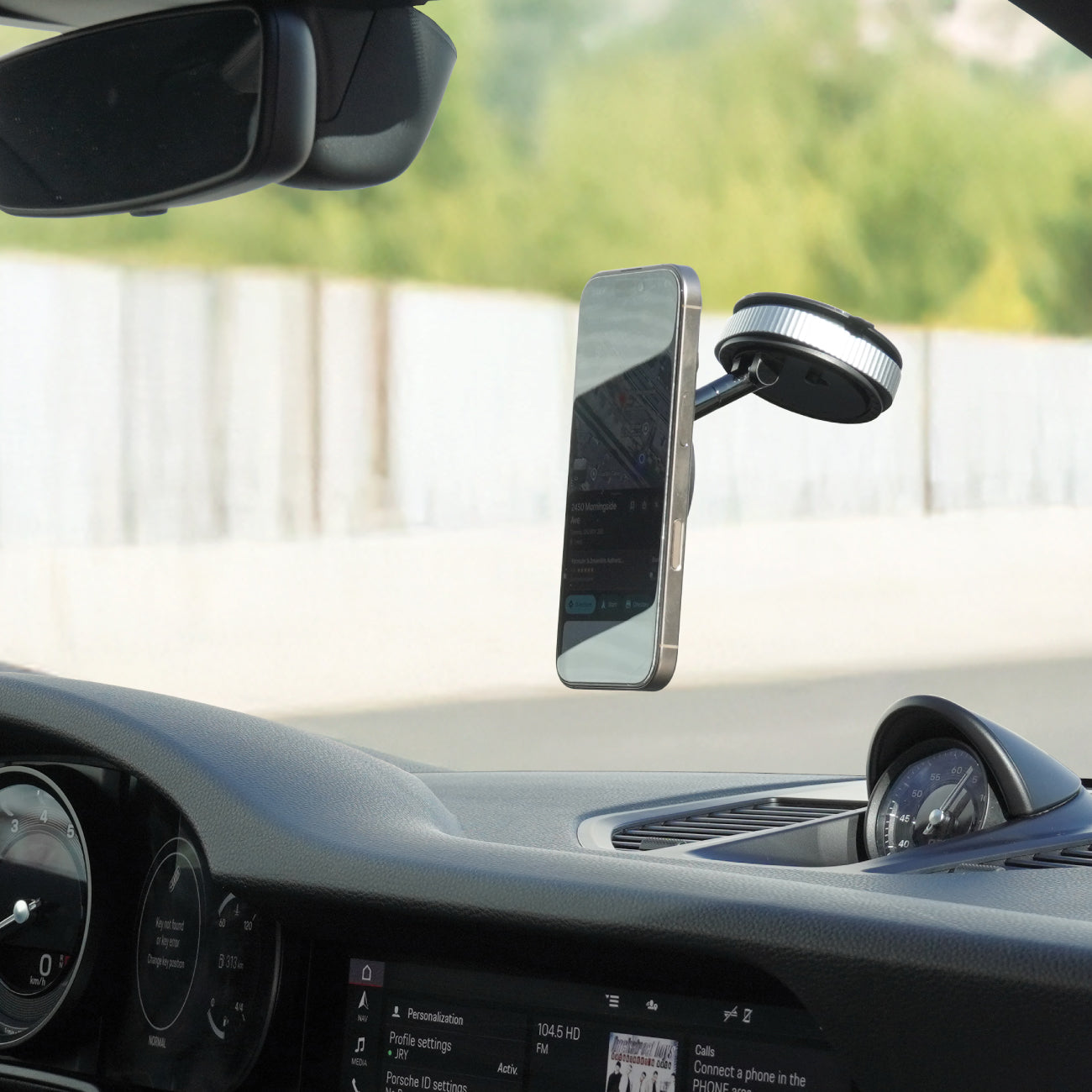
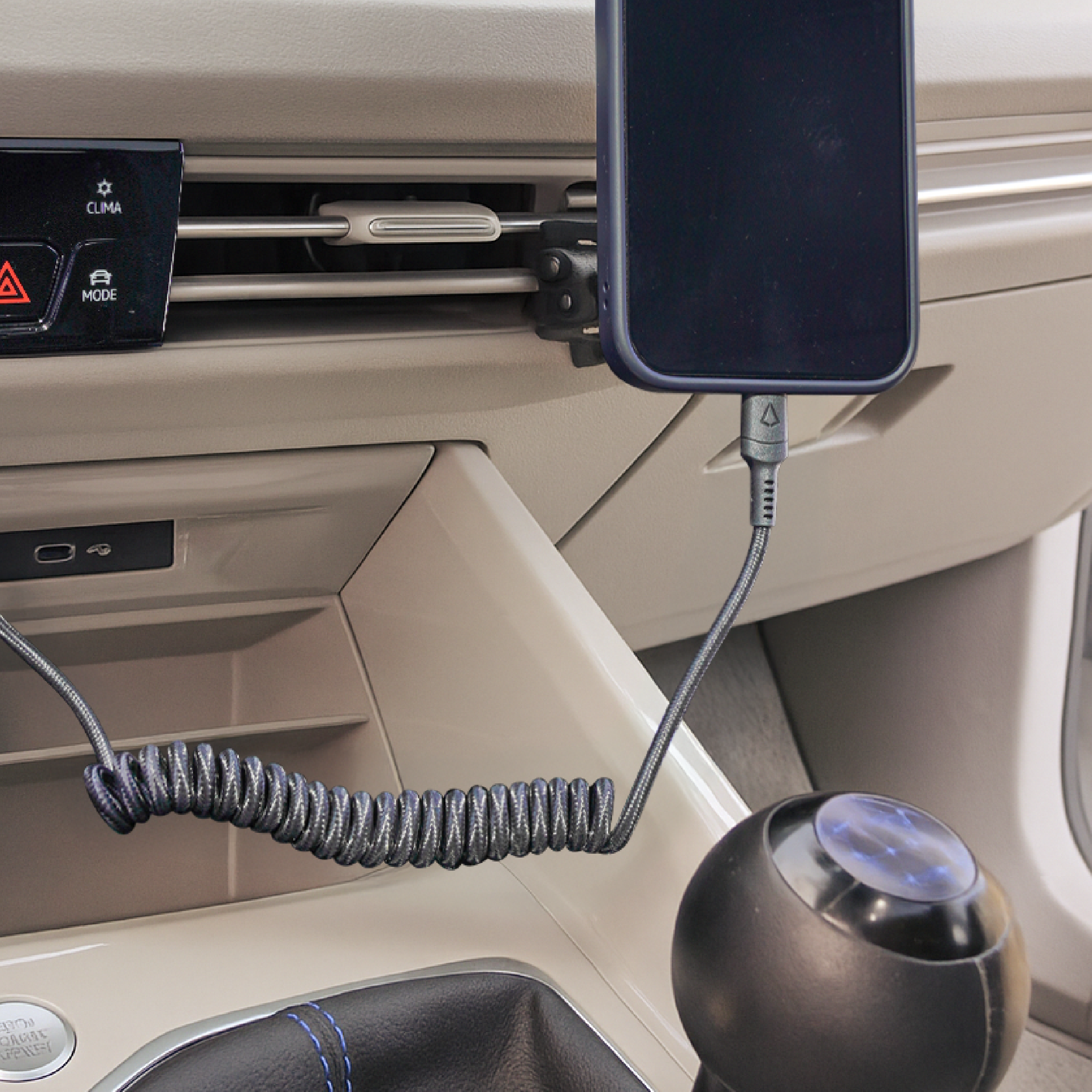
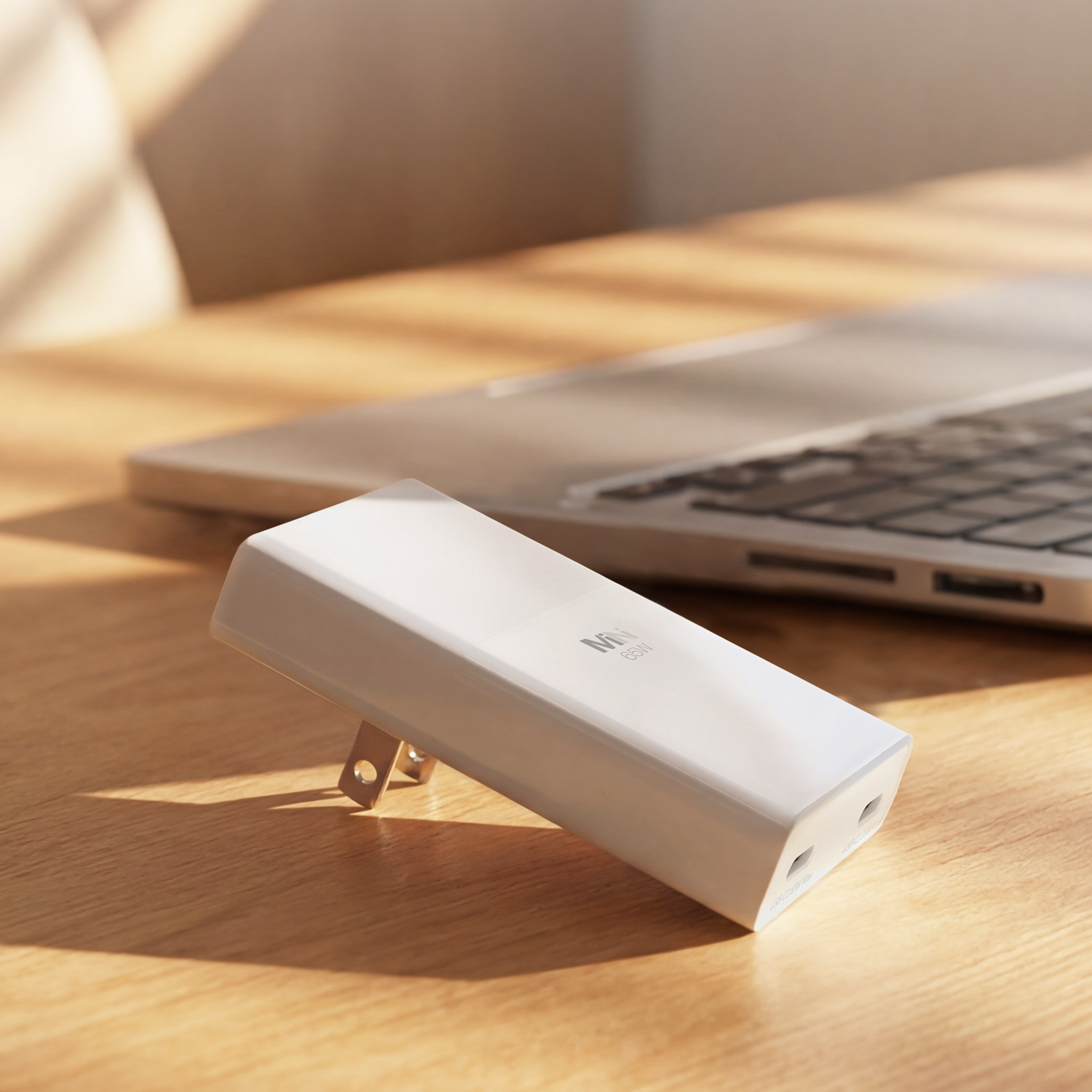
If you've shopped for a charger recently, you've probably noticed a lot of products labelled "GaN." Some are tiny. Some claim to charge your laptop and your phone at the same time. And most cost a bit more than the standard charger you've been using for years.
So what's actually different? And is it worth upgrading?
Here's everything you need to know.
What Is a GaN Charger?
GaN stands for Gallium Nitride — a semiconductor material that replaces the traditional silicon found inside most chargers. The switch matters because GaN can handle electricity at higher frequencies with less energy wasted as heat.
The practical result: GaN chargers can deliver the same power (or more) from a much smaller package, run cooler, and charge devices faster than conventional silicon-based chargers.
In short, GaN is the reason a charger the size of a lip balm can now power a laptop.
GaN vs. Regular Charger: The Key Differences
| Feature | GaN Charger | Regular (Silicon) Charger |
|---|---|---|
| Size | Compact — often 40–60% smaller | Bulky |
| Heat output | Runs cool | Can get warm or hot |
| Energy efficiency | High — less power wasted | Lower |
| Charging speed | Fast, with USB-C PD | Varies — often slower |
| Multi-device support | Common (2–4 ports) | Usually single-port |
| Price | $25–$75+ | $10–$30 |
Why Does Heat Matter?
Heat is the enemy of electronics. When a charger runs hot, it's wasting energy — and that heat transfers to your devices over time. GaN's ability to operate at higher electrical frequencies means it generates far less heat while delivering the same output. That's better for your charger, and better for your phone, tablet, or laptop's long-term battery health.
What Wattage Do You Actually Need?
This is where most buyers go wrong. More wattage isn't always better — what matters is matching the charger to your devices.
General wattage guide:
- Smartphones only: 30W is plenty. It will fast-charge nearly any modern phone.
- Tablets (iPad, Android): 45W is the sweet spot.
- Laptop (MacBook Air, slim Windows laptops): 65W minimum.
- MacBook Pro 14": 100W recommended.
- Charging multiple devices at once: Add the wattages together, then add 10–20% headroom.
One important note: when you plug multiple devices into a multi-port GaN charger, the total output is split between them. A 65W dual-port charger might deliver 45W to your laptop and 20W to your phone — which is still fast charging on both. Check the charger's per-port specs if simultaneous speed matters to you.
What to Look For When Buying a GaN Charger
1. USB-C Power Delivery (PD) support This is the modern fast-charging standard. Any GaN charger worth buying should support USB-C PD. Without it, you won't get the fast charging speeds GaN is known for.
2. Number and type of ports A two-port charger (one USB-C, one USB-A) covers most setups. If you've fully moved to USB-C devices, an all-USB-C model gives you more flexibility. Four-port options are great for desks or families, but add some bulk.
3. Safety certifications Look for UL, ETL, or CE markings. These indicate independent safety testing — important when dealing with the power levels modern fast chargers operate at.
4. Foldable prongs A small detail that matters: foldable prongs protect your bag and outlets. Most quality GaN chargers include them.
5. Warranty Reputable manufacturers back their chargers with at least a 1-year warranty. It's a reliable signal of build quality.
Do You Really Need to Upgrade?
If you're only charging one phone and you don't travel much, your existing charger probably works fine.
But if any of the following applies to you, a GaN charger is a genuine upgrade:
- You charge a laptop, phone, and tablet daily
- You travel and want to reduce what you carry
- Your current charger gets noticeably warm
- You're still using a slow 5W or 10W charger from an older device
The convenience of replacing two or three bulky chargers with a single compact unit — without sacrificing speed — is where the value really shows.
The Bottom Line
GaN chargers are smaller, cooler, and more efficient than traditional silicon chargers. They're not a gimmick — the underlying technology is a genuine improvement in how charging hardware works.
For everyday use, a 30W GaN charger handles smartphones quickly and cleanly. For a full setup — laptop, phone, earbuds — a 65W or 100W dual-port model is the most practical choice.
The LBT 30W GaN PD Wall Charger (Mini) and 65W Dual Port Slim Mini Wall Charger are built with exactly these use cases in mind: real fast-charging output in an honest compact form factor.
Looking for the right charger? Browse LBT's full wall charger lineup at lbtstore.com.


Leave a comment
This site is protected by hCaptcha and the hCaptcha Privacy Policy and Terms of Service apply.